
Smart Water Treatment and Quality Monitoring System
A smart system designed to treat and monitor water polluted by illegal mining (galamsey). It uses sensors and IoT technology to measure water quality in real time, ensuring safer and cleaner water through an efficient and affordable solution.
Water pollution caused by illegal mining (galamsey) has become a major environmental challenge in Ghana, affecting access to safe and clean water. This project presents a smart solution that combines water treatment with real-time monitoring using sensors and IoT technology. The system is designed to detect key water quality parameters at different stages of the treatment process, including turbidity (before and after filtration), mercury levels (before and after filtration), temperature, and pH. This enables effective evaluation of the filtration performance and overall water quality improvement. The system operates in both automatic and manual modes, giving users flexibility in controlling the treatment process. In automatic mode, the system runs independently based on sensor readings, while in manual mode, users can control operations directly. A mobile application is also integrated, allowing real-time monitoring and control of the system from anywhere. By combining smart monitoring, flexible control, and water treatment, this project provides an affordable, efficient, and scalable solution to address water pollution in affected communities.
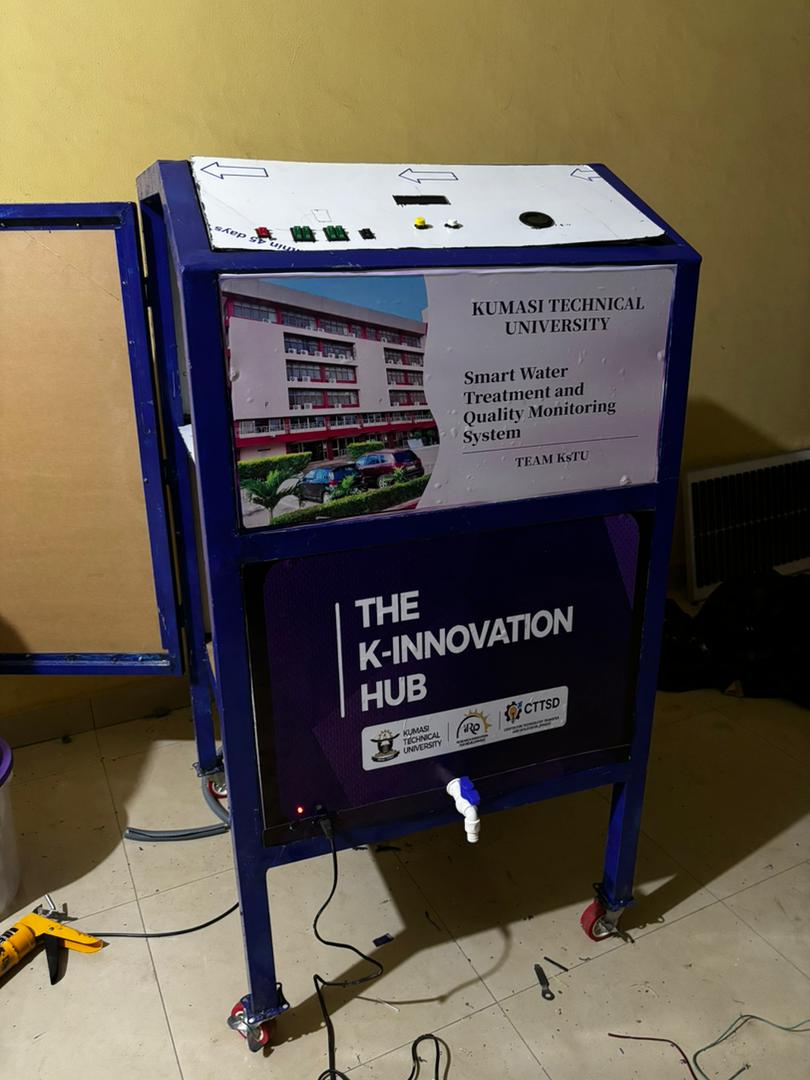
This system is designed to provide an intelligent solution for water treatment and quality monitoring in areas affected by pollution. It integrates multiple sensors to measure key parameters such as turbidity (before and after filtration), mercury levels (before and after filtration), temperature, and pH.
The water treatment process incorporates the use of specific purification chemicals and materials to enhance water quality. Aquatabs are used for effective disinfection by killing harmful microorganisms, chlorine tablets further ensure water is safe for use, and activated charcoal is applied to remove impurities, color, odor, and some harmful substances.
The system features both automatic and manual modes of operation. In automatic mode, the system responds to sensor data to manage the treatment process efficiently, while manual mode allows users to directly control the system when needed.
Additionally, the system is connected to a mobile application, enabling users to monitor water quality in real time and control the system remotely. This ensures convenience, efficiency, and improved water safety.
System Components and Architecture
The Smart Water Treatment and Quality Monitoring System is built with carefully selected hardware, sensors, chemicals, and software to ensure efficient and reliable operation. Its components work together to monitor and improve water quality effectively.
Key Components:
Sensors: Turbidity sensors (before and after filtration), mercury sensors (before and after filtration), temperature sensor, and pH sensor to measure water quality in real time.
Controller: Arduino/ESP32 microcontroller to process sensor data and manage system operations.
Actuators & Pumps: Control water flow through filtration stages in both automatic and manual modes.
Water Treatment Materials:
• Aquatabs – disinfects water by eliminating harmful microorganisms.
• Chlorine Tablets – further purifies water for safety.
• Activated Charcoal – removes impurities, odor, color, and some toxic substances.Mobile Application: Allows real-time monitoring, data visualization, and remote control of the system.
Power Supply: Ensures stable operation with an option for solar or battery backup.
System Architecture:
The system is designed with a modular approach: water first passes through the chemical treatment stage (Aquatabs & Chlorine), then through filtration using activated charcoal. Sensors before and after the filter continuously monitor water quality. The controller analyzes the sensor data to decide when to run pumps, activate treatment, or send alerts to the mobile app. Users can operate the system automatically or manually, giving flexibility and control.How the System Works
STAGE ONE: Sedimentation / Water Intake
Contaminated water is drawn into the system and passes through the initial intake stage. Sensors measure turbidity, mercury levels, temperature, and pH before treatment to assess water quality.
Chemical Treatment:
Aquatabs and chlorine tablets are added to disinfect the water and remove harmful microorganisms, ensuring safety from bacteria and pathogens.
STAGE TWO: Filtration
Water passes through activated charcoal, which removes impurities, odor, color, and some toxic substances such as mercury. Sensors placed after the filter monitor turbidity and mercury levels to evaluate filtration effectiveness.
STAGE THREE: Plant Treatment / Monitoring Using Sensors
This stage focuses on real-time treatment and monitoring of water quality to ensure it meets safety standards for human use.
Key Activities:
Continuous Sensor Monitoring:
Turbidity sensors (before and after filtration)
Mercury sensors (before and after filtration)
pH sensor
Temperature sensor
Heating System:
Water is heated to a specific temperature to kill harmful microorganisms, working alongside Aquatabs and chlorine tablets to maximize purification.Automatic & Manual Control:
The system can operate automatically based on sensor readings or manually via the mobile app.Recycling Mechanism:
If any parameter does not meet safety standards, a pump sends the water back to Stage One to repeat the treatment process.
Outcome:
This stage guarantees that only water meeting safety standards proceeds to the output. Heating, chemical treatment, filtration, and sensor monitoring work together for clean, safe, and reliable water.
STAGE FOUR: Clean Water + IoT Monitoring
After treatment and filtration, clean and safe water is ready for consumption or use.
Automated Water Treatment Control:
Pumps, chemical dosing, heating, and filtration rates are automatically adjusted based on real-time sensor data.
Manual Mode Option:
Users can override automatic control via the mobile app to manage water flow, heating, or chemical dosing manually.
Mobile App Integration:
Real-time data is sent to the mobile application for monitoring.
Alerts notify users if any parameter falls outside safe limits.